THREE:
FORE:When the Bourbons had entered Paris in 1814 they had shown the utmost liberality towards those who had driven them from France and had murdered those of their family on the throne and nearest to it. They did not imitate the summary vengeance of Napoleon, whose Government, in 1812, had put to death not only General Mallet, who had endeavoured to restore the Bourbons, but also thirteen of his accomplices, on the plain of Grenelle. When Louis XVIII. returned, there were numbers of the bloody Revolutionists who had voted for, and some who had acted in, the frightful atrocities of the Revolution¡ªmany who had urged on the sufferings, the indignities, and the death of Louis XVI., Marie Antoinette, the Princess Elizabeth, the Princess Lamballe, and the worst form of death of the unhappy Dauphin. Yet no vengeance was taken, and numbers of these people were allowed to reside unharmed in Paris. Having been now again driven forth, and seen the readiness with which those who had sworn to maintain their Government had taken their oaths and betrayed them, it might have been expected that there would have been some severe punishments. But the natural mildness of Louis XVIII., and the wise counsels of Wellington and Talleyrand, produced a very different scene. Never, after such provocations, and especially to the sensitive natures of Frenchmen, was so much lenity shown. In the proclamation of Louis XVIII. of the 24th of July, nineteen persons only were ordered for trial, and thirty-eight were ordered to quit Paris, and to reside in particular parts of France, under the observation of the police, till their fate should be decided by the Chambers. Of the nineteen threatened with capital punishment, with trial before a military tribunal, only Ney and Lab¨¦doy¨¨re suffered; another, Lavalette, was condemned, but escaped by changing dresses with his wife in prison. It was also stated that such individuals as should be condemned to exile should be allowed to sell their property in France, and carry the proceeds with them. Yet more clamour was raised by the Buonapartists about the deaths of Ney and Lab¨¦doy¨¨re than had been made in any executions by the Imperial or the Revolutionary parties over whole hecatombs of innocent persons. As for Ney and Lab¨¦doy¨¨re, their treason had been so barefaced and outrageous that no reasonable person could expect anything but summary punishment for them. Ney had declared to Louis XVIII. that he would bring Buonaparte to him in a cage, and then carried over his whole army at once to the Emperor. Lab¨¦doy¨¨re had been equally perjured after the most generous forgiveness of his former treasons, and he had been particularly active in stimulating the Parisians to make a useless resistance to the Allies approaching Paris, by stating that the Bourbons were preparing a most sanguinary proscription. Both officers knew that they had no hope of life, no plea of protection, and they fled in disguise. Yet vehement reproaches were cast on the Duke of Wellington for having, as the Buonapartists asserted, broken the 12th article of the Convention of Paris, by which the city was surrendered to the Allied armies. Madame Ney, after the seizure and condemnation of her husband, went to the Duke, and demanded his interference on the Marshal's behalf, as a right on the ground of this article, which she interpreted as guaranteeing all the inhabitants, of whatever political creed or conduct, from prosecution by the restored Government. It was in vain that Wellington explained to her that this article, and indeed the whole Convention, related solely to the military surrender, and not to the political measures of the Government of Louis, with which the Duke had[115] publicly and repeatedly declared that he had no concern, and in which he would not interfere. When the Commissioners from the Provisional Government had waited on him, so early as the 2nd of July, at Estr¨¦es, and claimed exemption for political offenders, he showed them the proclamation of Louis, dated Cambray, the 28th of June, making exceptions to the general amnesty, and distinctly told them that he had no orders to interfere with the measures of the Bourbon Government. To this the Commissioners had nothing to object, and they thus clearly understood that the British commander would not take any part in political, but merely in military measures. Nevertheless, when Ney was executed, the clamour was renewed that Wellington had betrayed him. We now anticipate, somewhat, to dispose of this calumny, for there never was a party so recklessly addicted to charging their enemies with breach of faith as that of Buonaparte and his followers. The foul charge was so industriously disseminated over Europe, that Wellington, at Paris, on the 19th of November, 1815, issued a memorial on the subject, which he first caused to be sent to all the Allied Powers and then to be published. In this most decisive document he stated that the Convention of Paris related exclusively to the military occupation of the place, and was never intended, and could not be intended, to prevent either the existing French Government, the Provisional, or any French Government that might succeed it, from acting towards political offenders as it might deem proper. He had refused before to enter into a question of settling the Government. To make this clear, he quoted the 11th article, providing for the non-interference of the Allied army with property; and the 12th:¡ª"Seront pareillement respect¨¦es les personnes et les propri¨¦t¨¦s particuli¨¨res; les habitants, et en g¨¦n¨¦ral tous les individus qui se trouvent dans la capitale, continueront ¨¤ jouir de leur droits et libert¨¦s sans pouvoir ¨ºtre inqui¨¦t¨¦s, ou recherch¨¦s en rein, relativement aux fonctions qu'ils occupent ou avaient occup¨¦es, ¨¤ leur conduite, et ¨¤ leur opinions politiques." Lab¨¦doy¨¨re was shot on the 19th of August, 1815, and Ney on the 7th of December.
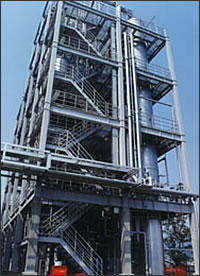
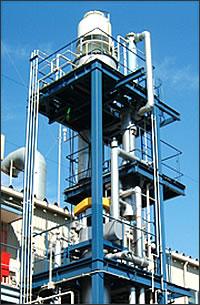
Methanol refinement systems, amyl alcohol refinement systems, ethanol refinement systems, hexanol distillation systems, propanol refinement systems, cyclohexanol distillation systems, isopropanol dehydration systems, ethylene glycol recovery systems, and butanol distillation systems.
FORE:We come now to the rebellion of 1715. The succession of the House of Hanover had raised the Pretender and his Jacobite faction in England to a pitch of excitement which made them ready to rush upon the most desperate measures. In England the destruction of the Tory Ministry, the welcome given to the new Protestant king, and the vigour with which the Whigs and all the supporters of the principles of the Revolution had shown the majority which they were able to return to the new Parliament, were all indications that the spirit of the nation was more firmly than ever rooted in Protestantism and the love of constitutional liberty, and that any endeavours to overturn the new dynasty must be supported by an overwhelming power from without. Without such force the event was certain failure; yet, under existing auspices, it was determined to try the venture. Bolingbroke, on his arrival in France, saw that all was rashness, impatience, and want of preparation in the party on both sides of the Channel. The Highlanders were all eagerness for the Chevalier's arrival, lest he should land in England, and the English should snatch the glory of the restoration from them. From England came the letters of Ormonde, who was down in the West, and sent most glowing representations of the spirit of the people there; that out of every ten persons nine were against King George, and that he had distributed money amongst the disbanded officers, to engage them in the cause of King James. But all these fine words terminated with the damping intelligence that nobody would stir until they saw the Chevalier with a good army at his back. Such an army there was not the smallest hope of obtaining from France. All that Louis would or could do, without engaging in a new war with England, was to prevail on his grandson, Philip of Spain, to[28] advance four hundred thousand crowns for the expedition, and besides this, the Pretender had been able privately to borrow another hundred thousand, and purchase ten thousand stand of arms. At this juncture came two fatal events¡ªthe flight of Ormonde and the death of Louis XIV. on September 1st.These reverses were calculated to make France more compliant; yet Pitt was astonished to find,[171] instead of compliance, a great spirit of resistance. Choiseul would by no means admit that Belleisle was an equivalent for Minorca. He demanded Guadeloupe and Belleisle too, simply in lieu of the French conquests in Germany. He now demurred to the surrender of Cape Breton, or in any case to forego the right of fishing along its coasts. He was not content with Amaboo or Acra; he demanded Senegal or Goree. He declined also to destroy the fortifications of Dunkirk, raised in contempt of the treaty of Utrecht. All captures made at sea previous to the declaration of war must be restored; and in Germany, though he was willing to withdraw the French troops, it was only on condition that the troops commanded by Prince Ferdinand should not reinforce the Prussian army.
Hexane distillation systems, tall oil distillation systems, benzene distillation systems, lubricating oil refinement systems, xylene-free distillation systems, low-boiling gas distillation systems, ethylbenzene recovery systems, fusel oil distillation systems, naphthalene distillation systems, propylene recovery systems, and turpentine oil distillation systems.
FORE:Meanwhile Brigadier Wild occupied a position of great difficulty at Peshawur. He had four native infantry regiments, containing a large number of young soldiers, whom the mutinous Sikhs had impressed with a great horror of the Khyber Pass. The only cavalry he had was a troop of irregular horse, and the only guns, four pieces of Sikh artillery. Besides, the owners of the camels, which had been hired at Ferozepore to proceed as far as Jelalabad, refused to advance farther than Peshawur. It was in these circumstances that Sale and M'Gregor earnestly urged the advance of the brigade for the relief of that place. The fortress of Ali Musjid, regarded as the key to the Khyber Pass, is situated about[498] twenty-five miles from Peshawur: and as it lay between the two positions of Sale and Wild, it was of the utmost importance that it should be occupied. It was accordingly resolved that one-half of Wild's brigade should be dispatched for this service. On the 15th of January Colonel Moseley, with the 53rd and 64th Sepoy Regiments, started under cover of the night, and reached their destination early in the morning. The fortress was about five miles up the Pass. Soon after they had taken up their position they discovered to their dismay that owing to some mistake, instead of 350 supply bullocks, which had been ordered, only fifty or sixty had arrived. Here, then, were two regiments shut up in an isolated fortress without provisions. Day after day passed and no succour came. Wild made an effort to send forward supplies, but the attempt was a disastrous failure. The Sikh auxiliaries mutinied to a man, and refused to enter the Pass. There being no prospect of relief, Colonel Moseley determined to evacuate the fortress. Captain Burt and Captain Thomas offered to remain and keep possession of so important a position, if only 150 men would volunteer for the service. But none were found willing to undertake the perilous duty, and so Ali Musjid was abandoned and suffered to fall into the hands of the Afreedis. The brigade had some fighting on its way back. Some of its officers were killed, some wounded and sick were abandoned, and some baggage was lost.The secret of this wonderfully augmented boldness of tone on the part of France soon transpired. Choiseul had been endeavouring to secure the alliance of Spain, and saw himself about to succeed. Spain was smarting under many losses and humiliations from the English during the late war. Whilst General Wall, the Spanish minister at Madrid, urged these complaints on the Earl of Bristol, our ambassador there, Choiseul was dexterously inflaming the minds of the Spanish Court against Britain on these grounds. He represented it as the universal tyrant of the seas, and the sworn enemy of every other maritime state. He offered to assist in the recovery of Gibraltar, and to make over Minorca to Spain. By these means he induced Spain to go into what became the celebrated Family Compact¡ªthat is, a compact by which France and Spain bound themselves to mutually succour and support each other; and to admit the King of Naples, the son of the Spanish king, to this compact, but no prince or potentate whatever, except he were of the House of Bourbon.
Ether distillation systems, camphor distillation systems, epichlorohydrin distillation systems, aniline distillation systems, dioxane refinement systems, acetonitrile distillation systems, furfural refinement systems, formalin distillation systems, cyclohexane distillation systems, monoethanolamine rectification systems, polyglycol ether distillation systems, dimethylformamide recovery systems, acrylic glycol ether distillation systems, acrylonitrile refinement systems, acetone recovery systems, pyridine distillation systems, methyl ethyl ketone recovery systems, picoline distillation systems, methyl isobutyl ketone recovery systems, and acetaldehyde recovery systems.